Tuesday, August 19, 2014

The Great Migration - Puritan Ships


http://awesomestories.com/images/user/8319855bee.png
Halsall, William F. Arrival of the Winthrop’s Ships in Boston Harbor. 1880. N.p.

Besides the famous (or should I say infamous?) Mayflower carrying Separatist passengers, there was a series of ships that brought Puritans to America in the seventeenth century.


The Recovery


In the Spring of 1633 (31 March to be exact), the Recovery set sail from Weymouth, Dorsetshire for New England, captained by Master Gabriel Cornish. Among its passengers were six Thomases, six Johns, two Roberts, a David, a Jonathan, a Daniel, a Joseph, a William, an Anthony, an Elizabeth, a Mary, and a Sarah. The oddeset name on board this ship was Ezechia, which was a variant of the name Hezekiah. 


The Elizabeth


The ship left port in mid-April 1634 from Ipswich, Suffolk, bound for New England. It took the ship six months to reach its destination, and the ship was captained by Master William Andrewes. It's not surprising that the most popular names on board were John (x15) and Elizabeth (x11), followed by eight occurrences of Thomas and eight occurences of Mary. Other classics included Henry (x5), Richard (x4), Isaac (x3) [includes variation Isaacke], Robert (x3), William (x3), Samuel (x3), Joseph (x2), George (x2), Sarah (x5), Susan (x4), Martha (x4), Anne (x5) [includes variantion Anna], and Abigail (x2). Less common occurrences of one passenger were Edmond, Martin, Daniel, Edward, Philip, Rose, Elinor, Bridget, Katherine, Rebecca, and Lydia. The most eccentric names on board were Thurston, which occured twice in father and son, Humphry, Abraham, Ursula, and Phebe. 


Other passengers on Puritan ships:


Just (Houlding, 23), Darcas (Rose, 2), Ffayth (Newell, 14), Wilbroe (Cooper, 42), Barbarie (Ruggels, 30), Augustine (Clement, --), Hercules (Woodman, --), Zacheus (Courtis, --), Etenetus (Olney, --), Isbell (Tuttell, 70), Sycillie (Clark, 16), Palmer (Tingley, 21), Eglin (Hanford, 46), Randolphus (Elmes, 15), Clement (Bates, 40), Jervice (Gold, 30), Jersula (Greenoway, 32), Hopestill (Ffoster, 14), Philemon (Dalton, 45), Abram (Ffleming, 40), Aymes (Gladwell, 16), Josias (Cobbett, 21), Hilary (Carter, 27), Gamaliel (Bewmont, 21), Caleb (Carr, 11), Bennett (Morecock, 16), Merriall (Saltonstall, 22), Tomazin (Carpenter, 35), Dyonis (Taylor, 48), Constant (Wood, 12), Michelaliel (Monnings, 3), Cesara (Covell, 15), Annis (Almy, 8), Geo (Cocke, 25), Theophilus (Jones, 3), Thomaxin (Manson, 14), Remembrance (Tybott, 28), Salomon (Martin, 16), Ephraim (Howe, 9), Obediah (Hawes, 6mo)

Any of these names peak your interest? I'll do a follow up post for other passengers on other Puritan/Pilgrim ships and the origins of some of these names. 

Monday, August 18, 2014

Name of the Day: Lilith

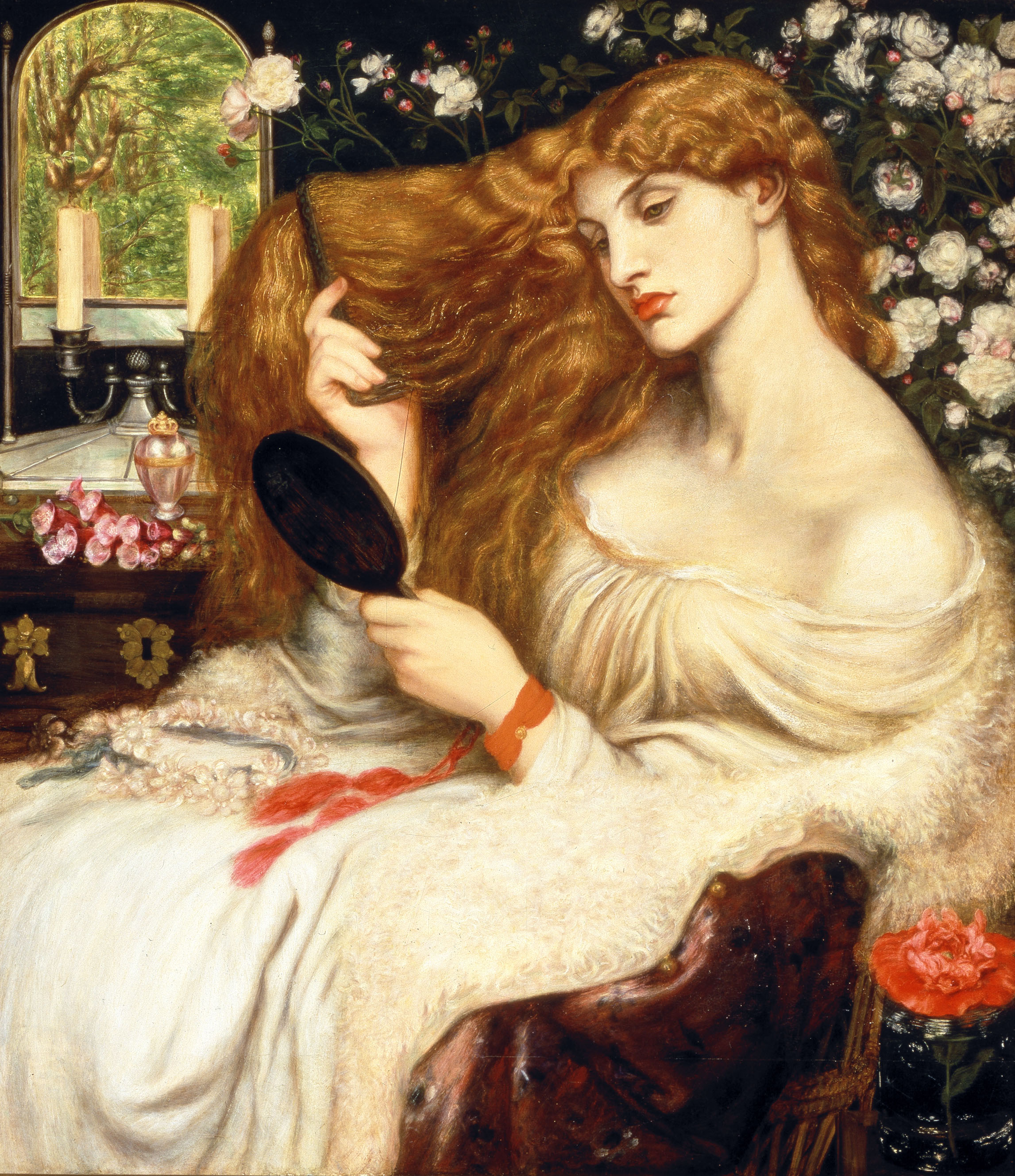
Saddled in between Paulina and Saniyah in the 2012 Top 1000 for the US at #826, Lilith is quite different from the rest of names in her popularity rank. Neither a feminization, a creative spelling, an English typographic, nor a trendy made-up name, Lilith is unquestionably a different girl from Julianne, Nathaly, Sutton, and Maliah. But why are some parents attracted to those versus Lilith? Why did Lilith even make the Top 1000 in 
America?


File:Lady-Lilith.jpg
Rossetti, Dante Gabriel. Lady Lilith. 1866. Bancroft Collecion. Wikimedia Commons. 28 Oct. 2013. Web. 13 Aug. 2014.


Etymology


The name comes from the semetic root L-Y-L layil in Hebrew, which comes from layl in Arabic, meaning "night". The words for "spirit" are lili and līlīu in Akkadian. Although the Akkadian lilu means "evening", it has no etymologic relationship to lili, Sumerian for she-devils. Charles Fossy states that לילית‎ literally translates to "female night being/demon".

The first identified use of Lilith is in the Epic of Gilgamesh written about 600 B.C. Samuel Noah Cramer translated ki-sikil-lil-la-ke as Lilith in "Tablet XII". However, "Tablet XII" is not part of the original Epic of Gilgamesh but is a later Akkadian translation of Bilgames and the Netherworld, a Sumerian poem. The serpent and the zu bird are associated with the ki-sikil-lil-la-ke. Lilith also occurs in the Bible, in the Book of Isaiah. The word lilit or lilith is listed as one of the eight unclean animals. The Greek translate the word as onokentauros (onocentaur), and 5th-century Vulgate translate the word as lamia. 

According to Medieval Jewish folklore, Lilith was the first wife of Adam but was soon rejected after refusing to obey him. She was then turned into a night demon.

Lilith first appeared in romantic literature in Faust: The First Part of the Tragedy (1808) by Goethe. Inspired by his work, the Pre-Raphaelite Brotherhood drew on Goethe's Lilith. In 1863, Dante Gabriel Rossetti began painting his rendition of Lady Lilith. Symbols in the painting do allude to her femme fatale disposition, such as poppies and white roses. Rossetti also wrote a sonnet entitled Lilith. In 1881, the sonnet was renamed Body's Beauty.


Namesakes


Other famous bearers of this name include Scarlet Lilith Eleida Page, daughter of Jimmy Page, and numerous characters on TV series that feature demons, vampires, or other frightening creatures.

Currently at #826, the name Lilith has not been in the Top 1000 long, only appearing in 2010 at #994, barely scrapping past the marking point. Seen as naming your son Lucifer in many countries, the name Lilith is not common in the Anglophone world. 


Nickname Options:

Lily, a floral name that's had a longer use in America and is now the highest its ever been. Popularly used in the nineteenth century, Lily lost popularity in the 1940s, '50s, '60s, '70s, and '80s, but has slowly been gaining a following. The name is also quite popular in England, Wales, Scotland, and Ireland, according to their top charts in 2012. Seemingly in the opposite direction of demonic, lily is the symbol of purity and innocence and plays a role in Christian imagery. There are many more namesakes for Lily, including Lily Allen, an English singer, Lily Rabe, an American actress, and Lily Tomlin. There's also variants of Lily that could work just as well: Lys, Lili, and Li. 


People who like Lilith also like...

Lucifer, Narcissus, Salem, Vlad, Morgana, Circe, Jezebel, Lolita

Gothic or not, this name is sure to give you the chills. Obscurity and history make their mark on a beautiful name with a soft sound, a lovely nickname, but a harsh reality to the truth behind Lilith's demonic behavior. Can your daughter handle Lilith?

Friday, August 15, 2014

Name of the Day: Hezekiah

If you've never heard this name before, you might be surprised to learn that as of 2013, this name is #889. Not overwhelming high, but for a name of little known significance and obscurity in the Bible (as opposed to names like Noah and Jacob) in a more secular world, it can be surprising that Hezekiah even made the top SSA 1000 and has been in it consecutively since 2006. What makes the name Hezekiah so appealing to parents these days?


Etymology

The Hebrew name חִזְקִיָּ֫הוּ , which was trascribed as Hezekiah, or sometimes Ḥizkiyyahu or Ḥizkiyyah, is of Hebrew origins. The name stems from the verb root חַזֵּק "strengthen",  הַחֲזֵק "seize", הִתְחַזֵּק "take courage". As a noun, the root חֶזְקָה means "strength" or חֲזָקָה "seizing". The root חָזֵק as an adjective means "strong." Generally, the name mostly likely means something along the lines of "strengthened by YHWH" or "God gives me strength." 


File:El Rey Ezequías haciendo ostentación de sus riquezas ante los legados del rey de Babilonia. (Museo de Bellas Artes de Valencia).jpg
López, Vincente. King Hezekiah Flaunting His Wealth. 1789. Museu De Belles Artes De València, Valencia. Delling in the Word. WordPress, 31 Jan. 2013. Web. 13 Aug. 2014.


The first recorded use of Hezekiah was in the 2 Kings in the Bible. His mother was Abijah (also called Abi), daughter of the high priest Zechariah, and his father was Ahaz, king of Judah and descendant of King David. When his father died, Hezekiah inherited the throne and became king at the age of 25. He ruled over Jerusalem for 29 years [2 Kings 18]. In accordance with David, he was faithful to the Lord. Hezekiah destroyed pagan places of worship and images of gods and goddess. He repaired the Temple as a his first act as king and then destroyed idolatrous worship. Because of his reign, Passover pilgrimages resumed, and he invited all the tribes of Israel to take part in the Passover festival. However, all but the tribes of Asher, Manasseh, and Zebulun refused to come. Hezekiah is one of the few kings praised highly and is generally considered a good and just king. He married Hepzibah. 


Namesakes


Other famous bearers of this name include Hezekiah, American rapper and producer born Hezekiah Davis III in Pennsylvania, Hezekiah Niles, an American publisher of Balitmore weekly magazine Weekly Register in the nineteenth-century, and Chaim Hezekiah Medini, a rabbinical scholar also of the nineteenth century.

When the US government began recording the popularity of names, Hezekiah made the cut at #588 in 1880 and hit its peak at #436 in 1891. After that, it began to decrease after 1924, when it dropped completely out of the Top 1000. The name didn't come back into style until 2006. In the UK and Australia, Hezekiah has never received quite the same love as it has in this country, never even making the top lists. 


International variants of Hezekiah: Ezekia (Albanian), Ezechiáš (Czech), Hizkiha (Danish), Hizkia (Dutch), Hiskia (German, Finnish, Swedish), Ézéchias (French), Ezekyas (Hatian Creole), Ezékiás (Hungarian), Ezechia (Italian, Romanian), Hiskía (Icelandic), Ezechias (Latin), Hetekia (Maori), Eskias (Norwegian), Ezequias (Portuguese), Ezequías (Spanish)


Nickname Options:

Zeke, usually considered the nickname for the important prophet Ezekiel, a related name of a similar meaning ("God strengthens"), and a popular alternative to the trendy Zack. End-of-the-alphabet names are all the rage as of right now. Currently Zeke stands at #858 in the US but has only been in the charts since 2012. People like Zeke Moreno and Zeke Steggall have made the name more mainstream. With many parents feeling Zeke as a tired nickname for Ezekiel, could Zeke be revamped with Hezekiah? 

Kiah, never having quite the same popularity as Zeke, Kiah is an older nickname more popular during Puritan and colonial times. It is also a nickname for Zedekiah, an even rarer Biblical name. Kiah is a zippy but still substantial nickname for Hezekiah. Its a distinctive choice with an effeminate flare.

Other options include Easy, Hez, Hezie, Kai, Key, Kez, and Ky. 


People who like Mordecai also like...

Hosea, Amos, Zephaniah, Amedeo, Keziah, Winifred, Johanna, Elisheba


Another beautifully quirky name that is becoming more mainstream. If you are looking for an offbeat-sounding name that has historic meaning, a name that is familiar without being overused, or a name that hosts an interesting collection of nicknames, Hezekiah might be one to keep in mind.

Thursday, August 14, 2014

Tragic Concubines of the Bible


'Hagar in the Wilderness', Giovanni Lanfranco
Lanfranco, Giovanni. Hagar in the Wilderness. Oil on canvas. Musée De Louvre, Paris.
The names are intriguing, but their backstory is a bit ... depressing. Let's explore some of those tragic women of the Bible.

Hagar
The first concubine mentioned in the Bible. She was the concubine of Abraham and the first to bring him the desired son. Her name means "stranger". Originally, she was an Egyptian slave girl but was never fully accepted by the Hebrew people. She belonged to Sarah. When Sarah could no longer conceive, she gave Hagar to her husband Abraham. Hagar became pregnant, and God promised that her son would be the ancestor of a great nation. Her son was named Ishmael. Despite being the mother of Abraham's desired son, Hagar was never fully accepted by the tribe and eventually was rejected and expelled into the desert. Yet God protected her and her son Ishmael from Sarah and her hatred for Abraham's first-born son. God sent an angel to protect Hagar and Ishmael. Hagar lived as a free woman, no longer a slave girl. Ishmael's name means "God hears" because twice God heard her cry out when Hagar was abandoned. Ishmael is believed to be the ancestor of the Muslim peoples, connecting Christians, Jews, and Muslims alike in an Abrahamic faith.

Bilhah
The maid of Rachel given to her by her father Laban when she married Jacob, Bilhah became a concubine of Jacob with Rachel's consent after she found herself barren. Although Jacob already had children through his first wife Leah, Rachel's sister, and Leah's maid Zilpah, Bilhah was given to Jacob because Rachel wanted to fulfill her promise to Jacob as his wife. When her first son is born, Rachel named him, showing her authority over Bilhah. Rachel said, "God has judged me and has heard my voice and given me a son." She names the boy Dan, meaning "he judged". Bilhah bears another son, and Rachel names him Naphtali, meaning "I have prevailed". Despite Rachel's claim over Dan and Naphtali, Dan and Naphtali are still considered Bilhah's sons, lowering their standing within the family. Bilhah's status is somewhat ambiguous. She is sometimes referred to as Jacob's wife and sometimes as his secondary wife, yet she is called "maid" in dangerous situations with Esau, Jacob's elder brother. In is stated in Genesis 35:22 that Bilhah had sex with Jacob's eldest son Reuben. This was considered a criminal offense to sleep with his father's wife in the Biblical laws. Jacob does nothing, but when he passes away, Reuben does not receive his extra inheritance as the first-born son. Her fate after this is unknown, but she is considerd the ancestress of two great tribes of Israel. In the Hebrew language, her name means "bashful."

Rizpah
Her name means "hot stone" in Hebrew. She was a concubine to Saul and bore him two sons: Armoni and Mephibosheth. After David lead a rebellion against King Saul and killed his three eldest sons and Saul, his fourth eldest son Ishbosheth became king. He was a weak king, therefore Saul's first cousin Abner backed him. Ishbosheth feared that Abner would one day dethrone him. Abner was accused of having sex with Saul's concubine Rizpah, but this had little significance since having sexual intercouse with a harem of a dead king was the same as claiming the throne. The Bible states that Abner took Rizpah against her will, but Rizpah could have been allying herself to Abner so that as king, her social position and her son's would improve. Ishbosheth believed the accusation (it is unknown whether or not Rizpah and Abner had sexual intercouse) and banished Abner from the court. Later, he was assinated after joining David, killed by Joab, the chief assistant of David. When Ishbosheth died, it was customary to kill the previous king's heirs – that meant Saul's heirs. This was a common practice in the ancient world. Rizpah's sons were executed, "hanged on the side of the mountain." Their bodies were left in the open air unburied. Rizpah stayed after their execution, guarding their bodies despite all weather conditions for about half a year. This created quite the scandal. David finally decided to let Rizpah's sons be buried.

Which name do you find tragically beautiful? Or, rather, what name are horribly unattracted to, both sound and Biblical story?

Wednesday, August 13, 2014

Top Biblical Names for Boys - US vs UK

Simple and sleek Biblical names are all the rage today in the United States. Names that neither our parents nor grandparents would ever been named are now trending more than ever. In a word full of Jaydens and Logans, it is refreshing to see so many Biblical names topping the charts.

This is based off the 2013 SSA report in the United States and the 2012 ONS report in the UK.
US/UK

Jacob #3 / #5
James #13 / #10
Benjamin #14 / #32 (diminutive Ben #749 / #118)
Joseph #20 / #22
John #27 / #104
Thomas #61 / #6
Joel #144 / #101

Apart from these names, other Biblical names from the SSA Top 1000 include Noah, Ethan, Michael
Daniel, Elijah, Matthew, David, Joshua, Andrew, Luke, Gabriel, Samuel, Isaac, Nathan, Caleb, Jonathan, Isaiah, Levi, Aaron, Jeremiah, Josiah, Zachariah, Adam, Nathaniel, Jesus, Micah, Silas, Timothy, Jonah, Steven, Ezra, Jesse, Jude, Malachi, Abel, Abraham, Ezekiel, Paul, Peter, Simon, Israel, Judah, Titus, Nehemiah, Reuben, Philip, Gideon, Ismael, Solomon, Cyrus, Saul, Moses, Isaac, Tobias, Uriah, Asa, Raphael, Eden, Jasiah, Zechariah, Elisha, Chaim, Javon, Ariel, Amos, Jairo, Thaddeus, Abdiel, Jair, Azariah, Enoch, Yael, Jedidiah, Hezekiah, Ephraim.

Any names you were surprised to see make it to the Top 1000? Any names you were surprised did not make the Top 1000? What Biblical names would you like to see for next for our young men?

Tuesday, August 12, 2014

Les Saintes de Bretagne – Clervie, Sève, & Tréphine

The saints of Brittany. Brittany, a cultural region in northwest France, is known for Medieval castles, seaports and fisheries, bagpipes, and pastries, but I'm not writing to discuss the diverse culture that is little known to the American public. Today we're discussing Breton saints. Breton saints offer a unique nomenclature that is part Medieval, part Celtic, part French, part Christian, and a whole lot of unknown. I'm sharing with you three Breton female saints and hope to follow up with three more every week, alternating genders every other week.

Sainte Clervie


called Klervi, Klervie, Klerwie, Kreivia, Clervie, Crevia, Cheirbia in Breton, in Welsh called Creirwy. Kierwi is an attested form. According to legend, one day, one of the sisters of Guénolé was chasing geese by the castle courtyard of Lesguen when a goose took her eye and swallowed it. This saddened her parents. While in prayer, Saint Guénolé was warned by an angel of what had happened to his sister. He went there, grabbed the goose, and cleaved the stomach. The eye was put back into place, and Saint Clervie regained her vision. Historically, Saint Clervie is the daughter of Saint Fragan and Saint Gwenn, both of whom are Breton saints. Her brothers include Saint Jacut (Jagu), Saint Guéthénoc (Gwezheneg), and Saint Guénolé (Gwennolé). In Gaelic, her name means "jewel", but "pearl" is also attributed to the word "haer", signifying strong. Clervie is the French form of the name.

Sainte Sève


called Sev, Sewa, Loeve, Loaven, in Breton, Sewo in Welsh, but also Santsegne in the 11th century, Senseguot in 1128, and St Scevat in 1598, is a semi-legendary saint of the 6th century.  Her feast day is celebrated on July 23 but is not recognized by the Roman Catholic Church. Very little is known about her. She was a daughter of Hoël I, King of Domnoncée in Britain, and St Koupaia, sister of St Tugdual, bishop and one of the seven founders of christianized Brittany. She was sister to St Lunaire (Leonor) and Hoël II. Albert the Great of Morlaix recounts that St Tugdual traveled Armorica with his disciples, received donations during his sermons and more land where he established monastaries. In the current village of Sainte-Sève, near Morlaix, he founded an abbey for his sister c. 530, now defunct. Saint Sève is the patron saint of Sainte-Sève and Langoat. She gave her name to Loaven where she is buried in the chapel

Sainte Tréphine


also called Trifine, Tryphine, or Triphine, is a semi-lengendary saint also of the 6th century. In the old legends, the wicked Conomor had murdered three women before Tréphine. She refused to marry him because of his reputation, but when he threaten to invade her father's lands, she agreed to marry him to spare the lives of her people. While Conomor was away, Tréphine discovered the secret room where her husband hid the remains of his dead wives. She prayed for their souls, and their ghosts appeared to her to warn her that if she ever got pregnant, Conomor would kill her. The reason for why he would want to kill Tréphine for being pregnant is speculated. One theory is that he only wanted sexual pleasure. Another states that a prophecy was foretold and that his son would kill him. Upon his return, Conomor learns that his wife is pregnant, but she manages to escape with the help of his dead wives. She gives birth to her son in the forest. She managed to hide her son before her husband caught her and decapitated her. However, Saint Gildas found out and miracously brought the newborn back to life. Tréphine and her son lived in seclusion after that. In other versions, after Tréphine's death, Conomor finds his son and kills him. Others say that Conomor was killed in his castle. There is a possibility that the tale of Bluebeard could come from this legend. Later, the Breton folklorist François-Marie Luzel discovered a play about King Arthur and Sainte Tréphine. In this version, Arthur became the husband of Tréphine, not Conomor. There have been links to similar characistics between Tréphine and Guinevere. The plot includes Tréphine's evil brother Kervoura inheriting the kingdom of Arthur. The plot is vaguely similar to the first legend where Tréphine becomes pregnant, he kidnaps her and hides the child, and then tries to incriminate Tréphine of murdering the baby. She managed to escape the prison and worked six years as a servant. In the end, Tréphine and Arthur are reunited. The feast day of Sainte Tréphine is 7 November, and her son Trémeur is 21 July. One parish, now a commune in Côtes-d'Armor, bears her name: Sainte-Tréphine, which has a chapel Saint-Trémeur.

More Breton female saints: Sainte Évette, Sainte Gwen, Sainte Gwendolen, Sainte Gwengustle, Sainte Mélarie, Sainte Morwenna, Sainte Ninoc, Sainte Nonne, Sainte Onenne, Sainte Pompée

Monday, August 11, 2014

Name of the Day: Mordecai

I know I shouldn't state my opinion, but I have to say Mordecai could possibly be my favorite Biblical name. Here's why...


Etymology

The Hebrew name מָרְדֳּכַי (rendered as Mordekhay), which was trascribed into the English language as Mordecai, or sometimes Mordikai, is of Persian origins. It means "servant of Marduk", which in turn is of unknown meaning. Marduk was the chief god of Babylonian mythology. He presided over the sky, the heavens, battle, light, and fertility. He killed the dragon Tiamat, the enemy of the gods, and created the earth and sky from the body of the dragon. 

The first recorded use of Mordecai was in the Book of Esther in the Bible. Some translations state that he was Esther's cousin, others say he was a relative. As a son of Jair, Mordecai was a Benjaminite, meaning he came from the Tribe of Benjamin, descended from Jacob's youngest son Benjamin. He adopted Esther as his daughter, who becomes the queen of Persia. Mordecai is hated by Haman, a vizier in the Persian Empire under King Ahasuerus, who is commonly identified as Xerxes I. Haman convinces the king to decree to destroy all Jews in the Persian empire. Mordecai hears of this and informs Esther. Through Esther's intervention, the king repeals the edict of the mass murder of the Jews. In memory of this event, the Jewish people continue to celebrite Purim. It is a feast day of rejoice for God's deliverence. 


Namesakes


Other famous bearers of this name include Mordecai Richler, Canadian author most notable for the novel The Apprenticeship of Duddy Kravitz, Mordecai Lincoln, uncle of 16th U.S. President Abraham Lincoln, Mordecai "Three Finger" Brown, American Major League baseball pitcher and Hall of Famer of the early twentieth century. 

In the US, the name has never even ranked in Top 1000 in the past century or so. Neither was it popular in other Anglophone countries, like the UK and Canada. 

International variants of Mordecai: Mordechaj (Czech), Mordechai (Dutch), Mardochai (German), Mardochée (French), Madoche (Haitian Creole), Mardocheo (Italian), Mordekai (Icelandic), Mardoqueu (Portuguese), Mardoheu (Romanian), Mardoqueo (Spanish), Mordokai (Swedish)


Nickname Options:

Cai, a name of its own in Latin and Hawaiian, popularly used in Wales (as of 2012, #56) and a character in King Arthur. The Latin name Cai is derived from Caius, sometimes transcribed as Gaius. Gauis is commonly seen in many Roman emperors names, as in Gaius Julius Caesar, Gaius Julius Caesar Augustus Germanicus usely called Caligula, and Gaius Julius Caesar Octavius usually known as Augustus Caesar. The name Cai means "to rejoice". Cai, or Kai, is a Hawaiian name meaning "sea", only recently being discovered. Other variants of this include Caio, Cay, and Keys.

Mordy, once considered an old man nickname along the lines of Morty and Monty. Mortimer and Montgomery, the longer forms of both nicknames, have yet to be revived. As Morty and Monty are seen as outdated, could Mordy possibly revive them? 

Other options include Morty or Morrie.


People who like Mordecai also like...

Melchior, Abraham, Leonidas, Ignatius, Bernice, Gertrude, Hepzibah, Jerusha

Whether you're looking for a religious name to honor your Judeo-Chritian heritage, a name with a rich history, or just a quirky name with some interesting nickname choices, Mordecai is one to keep in mind.